
NewsCONTACT US
Contact: 13539464725 Miss Chen
WeChat ID: jenny13539464725
QQ: 3202009534 Website:
www.londerlight.com
Email: info@londerlight.com
Address: Gangqian Avenue, Nansha District, Guangzhou City
|
News Center
Light and color of stage lighting
Time:2020/3/31 17:58:23;Click:1077
Architecture, sculpture, and painting that we usually understand are the art of keeping time and space relatively flat in three or three dimensions. However, as an integrated art of time and space, performing arts needs a space to maintain the relationship between performances—a theater or a performance venue. Stage artists in the performance beyond time and space together form a visual and auditory creative space with multi-dimensional factors such as sound, light, color, shape, etc., and continue to develop with the change of time, plot and scene. Whether it's a turning point in a drama plot or a performance of a opera, singing and dancing, at the same time, the performance lights in the audience's vision or in an unconscious way change the light effect of the light, the change of physical space or the functions of the lighting equipment This kind of visual performance effect. Participate in performances by shaping images, rendering colors, changing rhythms, and forming a special stage performance space atmosphere with visual vocabulary, which affects the emotional changes of the audience, and forms a specific space that interacts with the content of the stage performance. . In stage lighting design, the most important thing is the use of light and color. The so-called light color, that is, the color of light, is the most expressive modeling element in stage lighting. It is used to render the mood, atmosphere, and emotional characteristics of the drama; it is used to express space and time; It plays a very important role, and at the same time, the "second coloring" of the scenery, clothing and makeup props displayed on the stage, unifies and coordinates the stage's picture color. The combination of light and color is the most important way to create artistic effects on stage lighting. The color of light largely determines the color tone of the stage picture. Exciting shades of light are used to create a sense of beauty, affect the psychology of the audience, have great expressiveness and appeal, and have become the most commonly used means in today's theater performances. Arnheim pointed out in his book "Art and Visual Perception": "Color can express emotions powerfully ... The effect of color is very direct and spontaneous." Once the color of light penetrates into the waves of dramatic emotion, the theater's The atmosphere became active. In the use of stage lighting colors, the first thing to consider is the grasp of the large tones of the entire stage picture, which is similar to the painting process. Usually, in the initial stage of painting, we don't consider the details such as "how to draw this apple" and "how to express this vase", but first determine a large tone for our painting, and then do not affect Within this range of large tones, local details such as "Apple" and "Vase" are portrayed. In theatrical performance, the overall hue of the stage picture most intuitively gives the audience the first visual impression, which is undoubtedly the most eye-catching and important, and will play a powerful role in the expression of the theater emotions and the audience's visual reading.
In the art of painting, color tone is the main theme of a painting; in the art of theater, the color tone rendered by stage lighting can be called the “emotion score” of the entire theater performance. For lighting designers, color tone is the overall color grasp of all aesthetic objects on the stage. Because color is affected by the influence of adjacent colors, a color does not only exist in itself, its nature comes from the surrounding things. Thus, for the creation or design, the combination of colors forms a hue; the hue is determined by the overall intention of organizing the colors. In many stage pictures that are in line with the drama situation, a reasonable and reasonable color is the command and command of the stage lighting design works. In practical applications, it should be flexibly applied and selected according to the needs of the performance objects and the emotion of the theater. Light color is one of the more important and complicated factors of stage lighting. Color can arouse people's aesthetic experience, and people's memory produces similar associations. For example, red can make people associate positive and negative, associate with fire and blood, and then associate with the sun, wedding, war, etc., and feel warm, warm, festive or horrible, painful, death. In stage performances, light design often uses light-colored symbols or meanings to express and enhance the plot and render the atmosphere. However, because of differences in group culture, personal habits, and mood, color associations and feelings are also different and cannot be generalized. The colors are strong and rich, and the image is bright and prominent. The actor's facial makeup, costumes, props, and performances are all strong and formally beautiful. These visual elements alone can give the audience a strong visual stimulus. If you add "multicolored" lights, it will easily be counterproductive . In modern dance performances, white light is also a very important means of stage expression. The simple light color makes the audience's attention more focused on the aesthetics of the actors' posture, movements and postures. Of course, this white light expression is completely different from the bright white light expression in traditional Chinese opera. The lighting design of modern dance usually interprets the rhythm and beauty of dance through the combination of white light of different angles and brightness.
In stage performances, stage lighting often needs to simulate some kind of scene in real life. Sometimes, not only light is needed to create a space for the dramatic environment, but also the time when the plot takes place. At this time, the main performance light source confused the entire stage space, and the stage picture was unified under the influence of this light source to form a certain hue. The streets under the moonlight on the stage, the cabins under the oil lamps ... all show a certain atmosphere of color. Lighting design needs to observe the lighting effects in daily life, determine the nature of the main light source and the best orientation of the lamps on the stage, and emphasize the light and color sense. Of course, we must also pay attention to the entire stage space, background, and main performance light sources in terms of lighting effects. Echo. The lighting design should be based on the theme of the script and the requirements of the plot, the director, and other factors. When using color light, it must be bright and dark, cold and warm, and complex and simple. Considering the use of the color of the whole play, the fluctuation of the light color of the whole play is obtained through the change of the main tone between the shows. Reasonable use of light and color is necessary for a successful stage lighting design work, but it is not the only one. In the process of lighting design, even in the use of lighting to represent natural scenes, the establishment of hue should not just be an objective record of indifference, let alone blindly advocating the splendor of colors. This choice should be based on "theatrical", which reflects the unity of objective images and subjective emotions of "theatrical" and "human" in the tone of light. In this way, the use of color as a vocabulary of light is truly Complete the required overall atmosphere to make the performance more perfect. In terms of showing the character ’s psychology, the lighting design can be based on the script and the director ’s requirements, combined with the character ’s scheduling position, using the method of color and light contrast, the method of enhancing the brightness, or changing the light color to achieve the purpose of highlighting the main character and let the color The content and characters are beating, which produces unparalleled emotional power. As the Russian abstractionist Kandinsky said: The sensory effect of color will forget it after you get rid of it, and will not leave any lasting impression on it with the development of stage art! 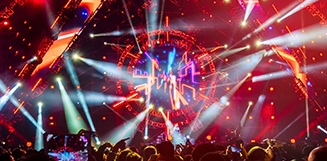
|
Product search
Popular searches:
Moving Head Beam Light
LED Waterproof Light
Maoming Rongde Lighting Technology Co., Ltd.

 13539464725
 3202009534